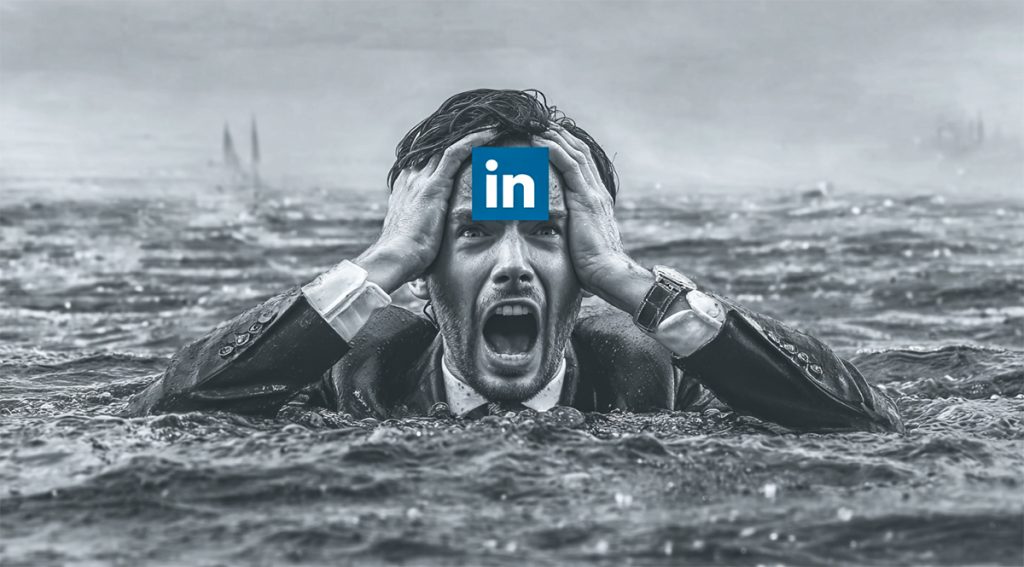
The LinkedIn Culture of Cringe: Why So-Called “Expertise” Is a House of Cards

I peruse Linkedin every now and then just to see what’s happening and see if there are any graphic artist jobs I might want to apply for. Honestly, I don’t really want to do that again, I just like to see what’s available. And almost every time I go on Linkedin, or get a message from someone, it feels smarmy, like everyone is trying to sell me something instead of just being genuine and offering authentic advice.

I recently connected with someone I didn’t know. I accepted their connection request, and they immediately wanted to “hop on a call” with me to discuss their services. Seriously? I don’t even know who the hell you are. Leave me alone.

This just perpetuated the feeling of cringe I get every time I surf that platform. And I had no idea it was so bad. I thought I was the only one. And then I went looking for “Linkedin cringe memes” on Google Images one day. I was instantly surprised, to say the least. I absolutely had no idea.

There are thousands of memes, videos, websites and articles on how cringe Linkedin has become. Apparently, I am not the only one that feels this way, but it was quite satisfying to come to the realization that there was in fact, something seriously off about Linkedin.

LinkedIn has become the digital land of self-proclaimed CEOs, overnight “thought leaders,” and motivational quotes so cheesy they make a soup bowl full of queso jealous. What started as a professional networking site has morphed into a magic show of smoke and mirrors where everyone sees themselves as a visionary, a disruptor, or the next Richard Branson even if their last job was folding sweaters at an outlet mall retail store.

The problem with LinkedIn is that it has created a culture that rewards mediocrity wrapped in buzzwords, promotes unearned confidence, and perpetuates a cycle of undeserved validation. It’s not just cringe-worthy, it’s downright damaging to the individuals involved, their audiences, the real experts, and the professional landscape as a whole.

I do realize there still is a valid use for Linkedin as a platform, because there are true professionals in their respective fields, but the cringe, pseudo-expert, unqualified “consultant” culture is wreaking havoc on a once useful idea.

So, let’s break it down: why does this happen, what makes it harmful, and more importantly, how can it be fixed?

The Echo Chamber of Unqualified Praise

Scroll through LinkedIn, and you’ll quickly see the pattern:

  1. Someone posts an article riddled with typos, vague ideas, and “insights” that would make Captain Obvious roll his eyes.
  2. The comments flood in: “Brilliant work, Darth!” “So insightful, Guinevere!” “This is exactly what the world needs!”
  3. Meanwhile, anyone with real expertise or discernment is quietly facepalming, wondering if they’ve stumbled into a parallel universe where mediocrity and cringe are celebrated.

It doesn’t matter if the advice is terrible or the logic nonsensical, someone will shower the poster with applause. Why? Because LinkedIn has become less about authenticity and more about quid pro quo back-slapping.

I just read an article the other day that was oozing with spelling and grammatical errors, the thoughts were completely disorganized, there was no upshot or conclusion and I had to read it 3 times to finally get the gist of it. But, true to the culture of cringe that is Linkedin, 3 or 4 people popped in to offer kudos on an article that was basically nonsense. It was like you know what attracts flies. I could hardly believe the praise this article received when any high school or college English teacher would have given that essay an easy F.

The “you scratch my back, I’ll scratch yours” mentality has turned LinkedIn into a toxic positivity loop where everyone pretends to be brilliant, and no one dares to call out the nonsensical bullshit. This isn’t real life. Yes, everyone has moments of great insight, but not everyone is brilliant. Einstein was brilliant, and it only takes one trip to the grocery store where someone parks their cart sideways across the aisle to know that not everyone is brilliant or self-aware.

The Cringe Factory: Where Confidence Outpaces Competence

Let’s be honest, there’s a fine line between confidence and delusion, and LinkedIn users routinely ignore this line. You’ll see posts from someone with 13 weeks of internship experience confidently declaring themselves an “industry disruptor.” A server who worked one summer at a chain restaurant is now offering consulting services on supply chain logistics, hospitality tech stack expertise and menu optimization. They’ve run credit cards through a point-of-sale terminal at a 12 table restaurant, and now they think they can consult on every bit of software and leadership training a major, worldwide hotel chain needs. 

And the kicker? They believe it.

The culture of LinkedIn encourages this behavior. It’s a platform where buzzwords like “synergy,” “thought leadership,” and “growth hacking” reign supreme. If you string together enough jargon, people will take you seriously, no matter how hollow your actual insights are.

But this isn’t just cringe-worthy, it’s dangerous. When unqualified people present themselves as experts, they often give bad advice, mislead their audiences, and damage their own credibility in the long run.

The House of Cards: The Downfall of Fake Experts

Here’s the thing about building a personal brand on fluff, it doesn’t hold up when reality comes knocking. And I guarantee you, reality will one day rear its ugly head.

Imagine this scenario:

  • A self-proclaimed “hospitality guru” with very little actual experience, other than entry level positions, convinces a struggling business owner to hire them.
  • The “guru” implements nonsensical strategies they come up with based on being a server, and not an owner, investor, manager or having any real skin in the game.
  • The business fails, the owner suffers financially, and the “guru” quietly removes the title from their profile.

This cycle isn’t just embarrassing, it’s harmful. It ruins businesses, careers, and reputations. And yet, the LinkedIn culture of uncritical praise and relentless self-promotion ensures that the next wave of pseudo-experts is already gearing up for their turn.

How Did We Get Here?

Several factors contribute to LinkedIn’s cringe culture:

  1. Algorithm Rewards: The platform rewards engagement above all else, which means sensational, exaggerated posts get the most visibility. Substance often takes a backseat to spectacle.
  2. Toxic Positivity: Criticism is seen as negativity, so people avoid calling out bad advice or unqualified opinions for fear of backlash.
  3. Networking Overload: People want to grow their connections, so they leave overly flattering comments to curry favor, even when the post doesn’t deserve it.
  4. Imposter Syndrome Rebellion: Ironically, many users are fighting their own self-doubt by overcompensating with excessive confidence.

The Consequences of Cringe Culture

While LinkedIn’s cringe culture might seem like harmless fun, it has real consequences:

  1. Damaged Credibility: When everyone claims to be an expert, the term loses its meaning. Actual professionals struggle to stand out amid the noise.
  2. Bad Advice Spread Widely: Pseudo-experts often peddle simplistic or outright harmful ideas, leading others down the wrong path.
  3. Professional Fatigue: Genuine users grow weary of wading through a sea of cringe, which diminishes the platform’s value as a professional tool.
  4. Inevitable Burnout: The people perpetuating this culture often face eventual humiliation when their lack of qualifications is exposed.

How to Fix LinkedIn’s Cringe Culture

While the cringe will never disappear entirely, steps can be taken to make LinkedIn a more authentic and useful space:

1. Encourage Constructive Criticism

Normalize giving thoughtful, respectful feedback instead of mindless praise. If a post has merit, say so, but if it doesn’t, provide constructive input. And don’t be afraid to call out utter nonsense.

2. Reward Substance Over Style

LinkedIn’s algorithm should prioritize meaningful content, not just posts with high engagement. Articles and insights backed by data or experience should be featured more prominently.

3. Teach social media Literacy

Help users recognize red flags of pseudo-expertise, such as vague language, overuse of buzzwords, and lack of concrete examples.

4. Promote Humility

Celebrate authentic stories of growth and learning rather than overblown claims of instant success. Share failures as well as victories to encourage transparency.

5. Call Out the Nonsense (Gently)

If you see bad advice or over-the-top self-promotion, call it out, but do so with kindness and humor. Create a culture where honesty is valued more than empty compliments.

A Vision for a Better LinkedIn

LinkedIn would be a much better platform where people share genuine experiences, learn from one another, and grow together if people would be truly authentic and diplomatically call out bad advice. It could once again become a platform where expertise is earned, not exaggerated, and where genuine humility is seen as a strength, not a weakness.

It is possible, but only if we collectively stop rewarding the cringe. Stop applauding nonsensical bullshit. Stop encouraging people to over inflate their qualifications. Instead, let’s focus on creating a space where authenticity thrives, and professionals genuinely support one another.

LinkedIn doesn’t have to be a punchline. But for now? It’s the ultimate cringe comedy show, and many of us, including myself, are tuning in just for the laughs and entertainment.

The Paradigm Shift That Will Change Your Life

The Pink Business Club

Sometimes making a major change in life requires more than just making a few adjustments here and there. Sometimes it requires an entirely new way of thinking. If you want to rebrand your business, or other “things” in your life because they aren’t working like you want them to, maybe YOU are the thing that needs to be rebranded.

If you have come to a point in your life where things are just not working, and you find your days are filled with frustration about your situation, maybe it’s your job, your relationships, your business, whatever it is you face, it could be a good time to just stop everything and go have a talk with that person in the mirror.

Throughout our lives we adopt different ways of thinking that range from the rather naive when we are young, because we don’t have the life experience to know how many situations turn out to be less than ideal, to the rather cynical and gruff when we get older. As we age we begin to learn how to read people from past experiences and it becomes easier to read their true intentions with less and less interaction.

We recognize familiar patterns and behaviors from the get go. We say to ourselves, “Yep, I’ve seen that before and I know exactly where things are going with this one.” And we choose to stay away from that situation or person.

That same thing can be found in business as well. Most of the time, business people want to interact with us because they see us as a prospect, like on Linkedin, rather than just a person to get to know. There are a few people on the net that I am friends with, but I don’t really know them. However, they message me a few times a year and act as if we are best friends. They are way too familiar with me for someone I don’t even really know and I’ve never had any in person interaction with.

I don’t like that unearned familiarity. It feels creepy to me. I don’t want, like, or appreciate people being buddy, buddy with me that I am just an acquaintance with online. Sometimes, it just takes life experience to be able to recognize those things where people try to take advantage of us because they want the benefit. And sometimes, to our detriment unfortunately, we choose to ignore what we see and experience, for various reasons.

This is the marketing game people play. One of the things that what I call, perpetual marketers do, is they write training program after program and get you buying into the next big thing that is supposedly going to change your life. It’s some kind of webinar, Zoom call, business club for women, ebook whatever and they have you convinced the only way you are going to succeed is by buying their product or service.

They get you in on the free ebook or cheat sheet, then they get you to sign up for the $60 a month business club, then the next thing you know, you’re signing up for their $3,000 coaching program that is supposedly going to produce the magic you are lacking in your life and or business.

And there is a certain demographic of people who sign up for these perpetual rah, rah, rah, business classes and spend an absolute ton of money for the next big thing that’s going to bring them untold success in life. I had a cousin who must have spent close to $100,000 on programs that were going to make her successful. Now, my cousin had already been a successful businesswoman who owned a multimillion dollar travel incentive planning company and she traveled all over the world setting up fabulous trips for her clients.

That business eventually died down due to former employees striking out on their own and stealing her clients, so she got fully introduced to the perpetual seminar world of building a coaching business. And she proceeded to spend tens of thousands of dollars on traveling around the country, and sometimes overseas, going to endless and expensive seminars to learn how to be a business coach.

I have also done the endless seminars thing being in a couple of different mlm businesses. While I did gain some good business insight and met some interesting people at these seminars, they never stopped, and the major ones once or twice a year were expensive to attend. By the time you bought tickets and flew or drove to some far away destination, paid for a hotel, and bought all your meals out, you could easily spend $500 to $1,000 for a weekend. Those seminars were twenty years ago or more, so I’m sure the cost has more than doubled to attend many of these events now.

Eventually, what I began to realize was, almost all the information that was being doled out was all the same, it was just being said differently. At one level the motivation was certainly good, but I began to think, do I really need to keep attending these things? What if I just did the work? And that’s when it all began to change for me. And I’ll get to more of that in a minute.

I also attended a lot of training sessions or webinars online. And I began to see that in an hour long webinar, the first 20 minutes or so were all motivational nonsense. For the first one third of this hour I was spending learning about some new thing, it was all, “freedom, spend time with the family, be your own boss, travel the beaches of the world, blah, blah, blah.” I got to where I could hardly stand to be on these webinars because I would be yelling at the computer saying, “Just get to the point! How do I make the money? What’s the upshot? I want the meat and potatoes! Let’s get to it.”

I finally got to the point where I refused to attend yet another webinar. I flatly refused to schedule a time to set aside another hour of my life to be wasted when I only received 20 to 30 minutes, if even that, of usable information, while the rest of the time was spent introducing the speakers and getting us pumped up with rah, rah, rah motivation. I had had enough.

"Congratulations for having a va jay jay, you go girl!"

And a lot of times many of the calls or online meetings I attended were of little benefit to me. And I can imagine what some of the women’s business club Zoom meetings are like. It goes something like this, they sit around and ask silly questions and pat each other on the back simply because they all have vaginas. Congratulations, you have a coochie, you go girl! Guys do this too.

The problem is, nothing of substance gets done.

You get kudos because you read a book, or got a head shot and other business photos taken, or changed your wardrobe, or got a haircut. Yeah! Okay great, all those things need to be done, but what actual work did you do?

Oof!

That’s when it hit me. That was the paradigm shift! And that’s when things began to change. Not all the training sessions and products I bought were a waste of time. Sometimes you really do need to learn to do something you have no clue about, but, the bottom line is this: Light a fire under your ass and do some real, productive work already! Write the articles. Make the video. Edit the video. Make more content. Do it every day! Make the memes for Instagram. Build your Instagram audience. Start a Threads account and stick with it! Make yourself a Facebook page and build your audience. Fix the email links on your damn website so they actually work and don’t go to error pages. Use your Facebook or other ad account and fail, fail, fail, and spend $1,000 until you figure it out and it starts to work.

And when you finally find something that works, you have to chase it with the ferocity of a warrior as if nothing else matters. You have to stop posting the, “I read a book” content and start posting content your audience interacts with, and you have to post that kind of content every single day, multiple times a day. It must be a regular part of your workflow. Nope, posting 2 to 3 reels a week about going on a hike with your boyfriend or girlfriend, doesn’t count. No one wants to see that nonsense on your account that’s supposed to be about your business anyway.

At the absolute height of my content production and money making days I was writing 5 articles a day, plus producing 6 memes for each of my 3 Facebook pages, meaning 18 memes and 5 articles a day total. And I kept up that amount of content production for almost 2 years. It slowed down a little over the next 4 years, but it was still right up there in a work all day range. Some might say that is too much work, was it worth it? Well, ask yourself if doing that much work to make enough money in 6 years to live debt free for the rest of your life is worth it? Yes, it was most certainly worth it.

It was worth it because I got to the point that after years and years of attending endless webinars and buying endless how to make money online ebooks, I wasn’t learning anything new and was tired of the overhyped “change your life” stories to get you to buy the latest product. I knew what I needed to know and I made up my mind that I was going to end the loop of being in the continuous learning mode, and graduate to the continuous working mode.

It’s the work, dummy! And it’s nothing else. Yes, you do have to learn how to do things, but endlessly learning, ultimately doesn’t produce a damn thing. Work and only work produces results.

Stop being addicted to getting pats on the back for reading a dumb book and attending a webinar. Belonging to a club with like minded individuals may feel good, but it doesn’t buy groceries. Once you start actually doing the work, and the money starts coming in, you finally get addicted to the work, and not the buying of more nonsense.

Yes, you have to find the right thing to do that is going to result in a positive cash flow, but once you find it, work like you are a crazy person on that one thing. If it is working, put everything else that doesn’t make you money aside, and get to work on the thing that works, so to speak.

Get off the feel good, pat me on the back for doing nothing, addiction, and get out there and do the damn work!